
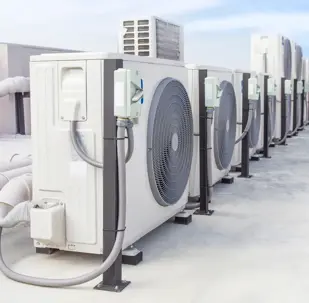
Why Fresno County & Central Valley businesses choose Caledonian Mechanical, Inc.
At Caledonian Mechanical, we make RTU maintenance simple, predictable, and budget-friendly. We offer Central Valley–leading financing for repairs and replacements, transparent flat-rate pricing, and we’re a Carrier® dealer that services every brand, make, and model. Our NATE-certified technicians use the most up-to-date diagnostics and provide practical energy audits so you see exactly where your kWh is going—and how to lower it.
Pricing: from $80 per rooftop unit (RTU) per visit for most sites. (Flat rate may vary by location, roof access, and unit count.)
Frequency: Quarterly (four visits per year) to keep filters, belts, economizers, and coils on track as seasons change.
Member perks: 15% off all repairs, transparent flat rates, photo-rich reports, and easy approvals via our CRM. Financing available for larger repairs and system upgrades.
What’s Included in a Caledonian RTU Cooling PM
1) Airflow & Filtration
- Replace pleated air filters (correct size/MERV).
- Inspect/clean the evaporator coil; remove debris.
- Blower section: clean wheel (as needed), inspect/replace belt, set proper tension, check bearings and lubricate where applicable.
- Static pressure test (return + supply) to confirm the duct system isn’t choking airflow. Lower static = quieter, more efficient cooling and longer equipment life.
2) Economizer & Ventilation
- Test fresh-air economizer through the full range (≈10% → 100% outside air).
- Check damper movement, linkages, actuators; lubricate moving parts where applicable.
- Verify temperature/enthalpy sensors; record sensor resistance for history and trend tracking.
3) Electrical Health
- Record voltage and amp draw on:
- Compressors (all stages)
- Condenser fan motors
- Blower motors/ECM drives
- Inspect disconnects, fuses, breakers, wiring terminations, and control boards for heat marks or looseness.
- Test high/low pressure switches and safety circuits; confirm overcurrent protection matches nameplate.
4) Refrigerant System
- Leak check with electronic detector; confirm with soap-bubble if needed.
- Verify charge using subcooling and superheat (when applicable to the metering device).
- Target cooling delta-T across the evaporator of about ~20–22°F (system/conditions dependent).
- Rinse the condenser coil to restore heat rejection and reduce head pressure.
5) Condensate Management
- Clear condensate pan and drain line with water.
- Install pan treatment capsule to discourage biological growth and odors.
6) Controls & Life-Safety
- Verify thermostats, sensors, and controllers respond correctly.
- Smoke detector interlocks: test with approved smoke aerosol where installed (single or multiple), confirm unit shutdown and BMS notification if tied in.
- Stage the system through fans and compressors to confirm each step of capacity is available.
7) Documentation & Communication
- All readings (volts/amps, pressures/temps, static, sensor resistances) are logged in our CRM.
- Photos of key findings: coils, belts, economizer parts, roof conditions, labels.
- Flat-rate estimates for any issues—sent by text/email for quick approval.
- Unit mapping: each RTU is labeled with the area served; you receive a simple roof map with photos.
Repair-First, Replacement When It Truly Makes Sense
Our promise: restore and optimize before replacing. We tune airflow, fix controls, correct charge, and clean heat-transfer surfaces first.
If replacement is the smart move, we:
- Perform a full site inspection (with roof condition photos: membrane, curbs, penetrations).
- Present a no-surprise scope (crane, curb adapter, electrical/gas, controls integration) and options for efficiency upgrades, economizers, surge protection, and filtration.
- Offer best-in-class financing options to keep cash flow smooth.
Why Planned Maintenance Pays for Itself
1) Fewer surprises, longer equipment life
Belts stretch, bearings dry out, coils load up, economizers stick. Quarterly attention prevents small issues from turning into emergency calls.
2) Lower kWh and steadier comfort
Clean coils + correct charge + proper airflow = more cooling per kWh. Spaces stay even; compressors avoid high-amp, high-heat conditions.
3) Better budgeting
Trend lines on amp draw, static pressure, sensor values, and delta-T turn maintenance into a planning tool—not a mystery expense.
Plain-English Notes on Key Checks
Static pressure = the “back-pressure” your blower fights in ducts and the unit. High static wastes energy, raises noise, overheats compressors, and hurts comfort. We flag causes (dirty filters, undersized returns, crushed runs, closed fire/smoke dampers) and fix them.
Subcooling & superheat
- Subcooling confirms a solid liquid feed to the metering device—steady capacity and efficiency.
- Superheat confirms dry vapor back to the compressor—no risk of liquid slugging.
Economizers
Free cooling when outdoor air is right. We test sensor logic and damper stroke so you actually get those ventilation and utility savings.
Electrical readings
Correct voltage and healthy amp draw keep motors and compressors out of the danger zone. High amps = heat = shorter life. We tighten connections and flag weak components before they fail.
Smoke interlocks
For higher-CFM units, smoke shutdown is critical. We test shutdown and BMS signaling so the system responds correctly in an emergency.
What Sets Caledonian Apart
- Quarterly discipline: four visits a year keep filters, belts, economizers, and coils on schedule.
- Repair-first mindset: we tune and fix before we recommend replacement.
- Carrier® dealer that works on every brand—no vendor lock-in for your portfolio.
- NATE-certified techs with modern diagnostics & energy audits—clear findings, not guesswork.
- Transparent, flat-rate pricing with photo-rich CRM reports you can forward to stakeholders.
- 15% off repairs for PM customers, plus flexible financing for bigger work.
- Unit mapping & labeling so everyone knows which RTU serves which space.
- Real communication: ETAs by text/email, “on-the-way” alerts, and clean summaries after each visit.
A Typical Quarterly Visit (Cooling Emphasis)
- Check in with site contact; quick comfort/issue review
- Filters, belts, bearings, lubrication
- Economizer test (10% → 100%), sensor verification
- Electrical tests: volts/amps, safeties, connections
- Refrigerant checks: leak scan, subcooling/superheat, coil condition
- Delta-T, static pressure, and staging (fans/compressors)
- Condenser/evaporator rinse as needed; clear drain; pan treatment
- Smoke detector/BMS function test (where installed)
- Label, photo, and roof map update
- Review findings, send flat-rate estimates with photos, get approvals
Ready to Set Up a Roof That Runs Itself?
Start with the quarterly PM plan (from $80/RTU/visit). We’ll walk your roof, map your units, and keep your filters, belts, economizers, and coils on schedule—so you can focus on running the business, not chasing comfort calls.
Caledonian Mechanical, Inc.
Commercial HVAC/R • Fresno County & the Central Valley
Carrier® dealer • NATE-certified technicians • Energy audits • Financing available
Priority service • 15% off repairs for PM customers • Transparent flat rates